Entomology Update with Monique Rivera

two ladybugs face to face on a green leaf

This is a summary of the new Scaffolds Podcast, as featured on the CE Eastern NY Commercial Horticulture Program blog. Click here to listen to the podcast.

Well, folks, it looks like we're off to a weird start to the season with a week of summer weather and now in western New York, cooler and wetter conditions. Maybe a weird start is more like a stumbling start because it will warm up again for a day or two in western New York, and then go right back to cool and wet. But either way, we are collectively heading towards Pink, and there are, as always, some insects to consider and think about treatments for. 

If San Jose scale is a concern, it's not too late to include a treatment for this. There are still options until foliar development progresses to the point where coverage will decline. So the real aim of this treatment is to make contact with the woody parts of the tree and hopefully make contact with any eggs or immatures that are there. So if you're focused on getting an oil applied for this, there's still time for a 1% oil spray through tight cluster again to cover those woody surfaces. If you think you will need more control, there are other insecticidal options to add. In particular, I would consider Centaur or Esteem, both of which are insect growth regulators. 

So last week I spoke about the idea of bulletproofing IPM programs, and I think a good thought experiment about that would be to think about what your management program would look like if Organophosphates and Pyrethroids, for example, were eliminated. The idea of this is kind of ridiculous because organic management can use Pyrethrins, which are the direct plant extract, but in all honesty, at higher levels this is being considered.

And it's something that along our journey here on Scaffolds, I probably will continue to mention, because if we don't think about it now, I really think that it will sneak up on the industry as things start to be considered for elimination. And so it would be good to start to think about again what your program would look like if you could not use whole classes or mode of actions of insecticides. It would be really helpful to your future programs to start considering that. Not that I know that this is coming down the pike in New York State, but I do know that in California, before I left, I was asked to review the use of pyrethroids, which is the beginning of that consideration. 

135+ organizations call for farm and food business technical assistance in the Farm Bill 

Rows of farm crops under the golden light of late afternoon sun

By American Farmland Trust

American Farmland Trust (AFT), the Agricultural Viability Alliance, and a national coalition of agricultural organizations, service providers, non-profits, businesses, lending institutions, and government entities, today sent a letter to leadership of the House and Senate Agriculture Committees calling for dedicated funding for business technical assistance and farm viability in the upcoming Farm Bill.

“As you begin the process of developing a new Farm Bill,” the letter, signed by over 135 organizations, writes, “[we] urge you to include dedicated funding for one-to-one business technical assistance for small and midsized farm and food businesses. These investments in farm viability are critical to achieving a more just, secure, resilient food supply chain, growing our rural economies, and helping farmers and food businesses weather periods of uncertainty, high input costs, and market disruptions.”

“Congress begins work on a new Farm Bill at a time when the agricultural economy and food system face a number of urgent, overlapping challenges,” said Tim Fink, Policy Director for AFT. “From historic inequities and systemic barriers for underserved producers, to rising input costs and vanishing margins, to generational transfer of farmland – business technical assistance has proven an effective and cost-efficient way of addressing these challenges and building capacity on the ground.”

The call for dedicated Farm Bill funding builds on work that AFT, in partnership with the Agricultural Viability Alliance (the Alliance), began in 2021 requesting USDA to set aside a portion of Coronavirus relief funding for one-to-one business technical assistance. More than 110 organizations joined AFT and the Alliance in urging USDA to prioritize this type of technical assistance to small and mid-sized farm and food businesses. In addition, 50 Members of Congress similarly encouraged USDA to support business technical assistance. USDA responded to this request with its establishment of two new initiatives: the Farm Service Agency’s Increasing Land, Capital, and Market Access Program, and the Agricultural Marketing Service’s Regional Food Business Centers.

“The entrepreneurs we serve face barriers to becoming financially viable, so we support them to develop financial management skills, access capital and land, and build resilient businesses,” said Benneth Phelps, Executive Director of the Agricultural Viability Alliance. “We do this by providing information, training, skill-building, and capital, within a carefully crafted ecosystem of support, and funding for this work in the Farm Bill is critical.”

Business technical assistance covers a wide range of one-to-one services offered to farm and food businesses by nonprofit organizations, state agencies, private consultants, and extension services. Customized to meet the unique needs of individual businesses, these services include coaching, skill development, and planning related to financial and labor management, marketing and business strategies, farm transfer and succession, and access to land and capital. BTA has proven effective at creating jobs and supporting local economies. This work is also critical to addressing historic and systemic barriers facing farmers and food entrepreneurs of color, who have been structurally denied opportunities to access capital, land, technical support, USDA programs, and broader professional advancement for generations.

Gov. Hochul announces $3.8M+ awarded to improve seniors' access to local foods

Senior citizen looking at a lemon while shopping in a grocery store

By NYS Department of Agriculture and Markets

Governor Kathy Hochul has announced the Department of Agriculture and Markets has been awarded over $3.8 million from the USDA Food and Nutrition Service to help New York seniors better access locally grown food. The funding comes from the American Rescue Plan Act and is part of $50 million the FNS is awarding in grants to 47 states and tribes to modernize and expand the Senior Farmers’ Market Nutrition Program at farmers’ markets, roadside stands, and community supported agriculture programs. It is one of many programs Governor Hochul is facilitating to source more locally grown and produced foods.

“One of our biggest strengths as a state is the wide scope of what we have to offer, and our farms’ bounty is at the top of that list,” Governor Hochul said. “With a fifth of our land used for farming for our 33,000 family farms, we’re bringing more of New York’s fresh produce and products not only to our seniors, but also to schools and State agencies — supporting our farms and promoting healthier lifestyles.”

In addition to the expansion of the Senior Farmers’ Market Nutrition Program, Governor Hochul will be issuing an Executive Order later this year to direct New York State agencies to source 30 percent of their food from New York producers while also inviting local governments and school districts to strive to meet this goal. The Governor’s proposed FY24 Executive Budget allocates $50 million to a grant program that will support scratch cooking facilities for schools using New York Farm products. The Budget also sets aside $10 million in funding for grants providing for expanded food access to farm markets, food co-ops, and other retail food stores in underserved communities, as well as over $2.2 million to expand urban agriculture infrastructure and community gardens across the state.

New York State Office for the Aging Acting Director Greg Olsen said, “Access to nutritious food is vital for preventing disease, helping to manage a range of chronic conditions, and increasing energy to stay active. As the administrator of the largest senior nutrition program in the country, NYSOFA uses every tool available to increase access to healthy foods from New York, improving overall nutrition and health for older adults. The Senior Farmers’ Market Nutrition Program allows thousands of older New Yorkers to access fresh products in their communities. NYSOFA thanks Governor Hochul and Commissioner Ball for their longstanding support and their leadership in expanding this popular and successful program.”

The grant funding allocates $3,378,945 to help New York serve more fresh foods to eligible seniors. It also allocates $500,000 to implement other program improvements, such as online applications and training for farmers interested in participating, web-based farmers’ market and farm stand directories, and outreach to more eligible seniors through partnerships with community organizations.

USDA’s Senior Farmers’ Market Nutrition Program provides eligible seniors with access to fresh fruits, vegetables, herbs and honey in 48 states, Puerto Rico and eight tribal areas. These foods help support nutrition security, ensuring older Americans have consistent and equitable access to healthy, safe, affordable foods essential to good health. Learn more about this program in New York State at https://agriculture.ny.gov/consumer-benefits-farmers-markets.

Farmers’ markets fill an essential gap in New York’s local food supply chains by improving access to and encouraging consumption of locally grown foods and supporting direct farmer-to-consumer transactions. Farmers’ markets, farm stands, and mobile markets are crucial components to a healthy food system. Today, New York has more than 400 farmers’ markets, 250 farm stands, and 10 mobile markets. They provide outlets for agricultural producers to meet the rising consumer demand for a variety of fresh, affordable, and convenient products grown directly from the farm. New York State—through the Department of Agriculture and Markets, Department of Health, Office for the Aging, and Office of Temporary Disability Assistance—administers several programs that help low-income families, seniors, and Veterans access fresh, healthy food at participating markets. To learn more about the Department’s farmers’ market programs or to find a market near you, visit https://agriculture.ny.gov/farmersmarkets.

Registration Open for Employee Development and Training Course

woman in tan long sleeve shirt planting tender green plants in greenhouse

Submitted by Cornell University College of Agriculture and Life Sciences

Cornell Agricultural Workforce Development has opened registration for a new online course in the Supervisory Leadership Certificate Program. Offered for the first time, “Employee Development and Training” course materials release and registration closes on March 3, 2023. Live weekly Zoom sessions will be held 3 to 4 PM EDT each Thursday from March 9 through April 13. Continuing education credits are offered. Course cost is $275 and spaces are limited.


Find information and registration for the Agricultural Supervisory Leadership certificate courses here.

“I hope participants will gain practical tools that they can put in their supervisory skills toolbox. They can pull these tools out and use them to build a great workplace and solve problems. Ultimately, we want farm managers to be just as confident about their ability to lead people as they are about their ability to manage farm production,” said Dr. Richard Stup, Agricultural Workforce Development Specialist.


Employee Development and Training is the course you’ve been waiting for! Identify training needs. Understand learning styles. Design and plan learning experiences that accommodate learner needs. Develop effective training skills and techniques. Evaluate learning results and training effectiveness.


“We’re always looking for ways to improve labor management and leadership skills and we encourage our employees to take courses too,” said Bob DiCarlo, FaBa Farms, who took the Managing Performance course, and his employee took Organizing Work for High Quality Results. “We’re focused on continuous improvement. One of the big pluses has been getting to have time to learn from people not in the same agriculture industry and to talk through real-life situations. The breakout Zoom sessions were worthwhile. It was helpful for me to talk through situations and for our employee too. It's easy to say I’m busy but pick the course that would be of most interest. When you push your comfort zone, it returns the most. We’re continuing to see the importance of stepping away from daily tasks on the farm to see the bigger picture.”


The Agricultural Supervisory Leadership Program includes a series of courses that help farm supervisors and managers learn and apply human resource management practices and leadership skills that foster rewarding workplaces and drive business results. Confident managers who thoughtfully apply leadership and management skills improve employee performance, develop teams, reduce employee turnover, and increase employee engagement. The six courses within the certificate series offer extensive practice and engagement activities to build confidence and skill sets.


Who should attend?

This course, and the whole certificate program, is appropriate for both new and experienced farm supervisors and managers, and those preparing to become supervisors. All participants learn leadership concepts and practice skills that improve their ability to build a positive workplace and get results through leading others.


How to attend?

The course is taught online, but you can still actively engage with other learners. Watch prerecorded presentations on your own schedule, and engage with classmates and instructors during weekly, live discussion sessions. Participation in the live sessions is highly encouraged and provides a valued opportunity for peer-to-peer learning and networking. Continuing education credits are offered.


Course instructors include:

  • Richard Stup, Cornell Agricultural Workforce Development Specialist

  • Elizabeth Higgins, Ag Business Management/Production Economics Extension Specialist with the Eastern New York Commercial Horticulture team

  • Libby Eiholzer, Bilingual Dairy Specialist, Cargill

  • Bob Milligan, Cornell University Professor Emeritus

  • Kaitlyn Lutz, Bilingual Dairy Management Specialist

  • Jay Canzonier, Cornell Agricultural Workforce Development Extension Support Specialist


Direct questions to Rachel McCarthy, Agricultural Supervisory Leadership Coordinator, at rachel.mccarthy@cornell.edu.


Courses in the Supervisory Leadership certificate program can be taken in any order and include:

  • Transitioning to Supervisor: Develop essential communication skills and manage conflict. Lead a multi-cultural team. Build an effective workplace culture.

  • Organizing Work for High Quality Results: Create an efficient and high-performing workplace. Develop clear expectations and standard operating procedures. Delegate effectively. Diagnose and correct performance problems.

  • Managing Performance: Understand motivation. Harness the power of performance feedback and coaching. Build clear and effective workplace communications. Set safety expectations. Conduct effective performance improvements.

  • Ethics and Employment Regulations for Supervisors: Implement responsible and ethical labor practices and understand why this matters for agriculture. Recognize and prevent sexual harassment. Understand and follow minimum wage and overtime laws. Implement Equal Employment Opportunity laws to prevent discrimination and harassment. Use an employee handbook. Handle employee discipline and termination.

  • Employee Development and Training: Identify training needs. Understand learning styles. Design and plan learning experiences that accommodate learner needs. Develop effective training skills and techniques. Evaluate learning results and training effectiveness.

  • Staffing and Organizing Your Team: Develop job descriptions. Learn how to find potential employees, interview and select the right people. Implement new hire documentation, employment authorization, and onboarding: bringing new employees into the business successfully and productively.


USDA Develops Simplified Direct Loan Application

Submitted by the USDA Farm Service Agency

The U.S. Department of Agriculture (USDA) has developed a simplified direct loan application to provide improved customer experience for producers applying for loans from the Farm Service Agency (FSA). The simplified direct loan application enables producers to complete a more streamlined application, reduced from 29 to 13 pages. Producers will also have the option to complete an electronic fillable form or prepare a traditional, paper application for submission to their local FSA farm loan office. The paper and electronic versions of the form will be available starting March 1, 2023.  


“USDA is committed to improving our farm loan processes to better serve all of our borrowers,” said FSA Administrator Zach Ducheneaux. “We’re consistently looking for ways to make the application process easier to navigate, so more producers are able to complete it. Our new direct loan application is a critical step forward in our efforts to improve customer service and build equity into not just our programs but also our services.” 


Approximately 26,000 producers submit a direct loan application to the FSA annually, but there is a high rate of incomplete or withdrawn applications, due in part to a challenging and lengthy paper-based application process. Coupled with the Loan Assistance Tool released in October 2022, the simplified application will provide all loan applicants access to information regarding the application process and assist them with gathering the correct documents before they begin the process. This new application will help farmers and ranchers submit complete loan applications and reduce the number of incomplete, rejected, or withdrawn applications.   


In October 2022, USDA launched the Loan Assistance Tool, an online step-by-step guide that provides materials to help an applicant prepare their farm loan application in one tool. Farmers can access the Loan Assistance Tool by visiting farmers.gov/farm-loan-assistance-tool and clicking the ‘Get Started’ button. The tool is built to run on any modern browser like Chrome, Edge, Firefox, or the Safari browser. A version compatible with mobile devices is expected to be available by the summer. It does not work in Internet Explorer.    


The simplified direct loan application and Loan Assistance Tool are the first of multiple farm loan process improvements that will be available to USDA customers on farmers.gov in the future. Other improvements that are anticipated to launch in 2023 include:   

  • An interactive online direct loan application that gives customers a paperless and electronic signature option, along with the ability to attach supporting documents such as tax returns.    

  • An online direct loan repayment feature that relieves borrowers from the necessity of calling, mailing, or visiting a local Service Center to pay a loan installment.   


USDA provides access to credit to approximately 115,000 producers who cannot obtain sufficient commercial credit through direct and guaranteed farm loans. With the funds and direction Congress provided in Section 22006 of the Inflation Reduction Act, USDA took action in October 2022 to provide relief to qualifying distressed borrowers while working on making transformational changes to loan servicing so that borrowers are provided the flexibility and opportunities needed to address the inherent risks and unpredictability associated with agricultural operations.   


Soon, all direct loan borrowers will receive a letter from USDA describing the circumstances under which additional payments will be made to distressed borrowers and how they can work with their FSA local office to discuss these options. Producers can explore all available options on all FSA loan options at fsa.usda.gov or by contacting their local USDA Service Center.  


Take Part in the 2023 CCE ENYCHP Fruit & Vegetable Conference

Colorful arrangement of fruit and vegetables with a sign for the 2023 Eastern New York Fruit & Vegetable Conference

After three years of virtual programming, the CCE ENYCHP Fruit & Vegetable Conference is back in person in Albany, February 22 and 23. Get ready for two full days of informative sessions, many of which will offer DEC credits, and a trade show.  After Wednesday sessions, enjoy light hors d’oeuvres and networking with vendors, conference attendees, and your peers at the attend the Trade Show Social. 

Register by February 12 to save money and ensure your room booking at a reduced rate. Click here for more information and to register.

Here’s this year’s agenda:

2023 CCE ENYCHP Fruit & Vegetable Conference

February 22-23, 2023

The Desmond Hotel & Conference Center
660 Albany Shaker Rd., Albany

Tuesday, February 21, 2023: Pre-Conference Produce Safety Grower Training Course, 8:15am-5:00pm 

Wednesday, February 22, 2023: 

  • Tree Fruit Sessions, 9:00am–4:00pm

  • Small Fruit Sessions, 9:00 am-3:30pm

  • Vegetable Sessions, 9:00 am–4:00pm

  • Join us after the sessions for our Trade Show Social, held in the Fort Orange Courtyard

Thursday, February 23, 2023

  • Tree Fruit Session, 8:30am-12:00pm

  • Vegetable Sessions, 9:00am-3:00pm

  • Grape Session, 9:00am–12:00pm

Conference costs: Pre-conference Food Safety training is $65/person.  Regular conference registration starts at $80/person/day for ENYCHP contributors. Discounts for multiday and multiple attendees from same farm are available. Walk-in registration is $130 per person per day. Register by February 15 for the best rates! 

Lodging:  Group rate of $149 per night per room at The Desmond. The deadline for this reduced room rate is February 12th. 

Events You Need to Attend This Winter

Diverse group of people sitting and listening to a conference session

A note from NYSBGA Executive Secretary Jim Bittner, on events you should attend this winter.

If you’ve got employees, you need to take part in the Becker Forum

If you have employees, plan to attend the Becker Forum in Syracuse on February 8. We have at least 8 farms in NYS that have petitions before the Public Employment Relations Board (PERB) that will require their workers to be represented by a union. Don’t think this cannot happen to you. The group includes large and small farms, H2A and domestic workers, from Long Island to Western NY. Wineries, fruit, vegetable, and nursery operations are all part of the petitions. The two attorneys that are representing most of the farms will be presenting at the Becker Forum. Someone from PERB should be there, too. You need to be at this meeting to learn how to protect your farm and employees.


The Becker Forum will be held from 8:30 a.m. to 5:00 p.m. at the Oncenter Syracuse. Register here.


Help us lobby for important funding


On February 15, the board of directors of the NYBGA plans on spending the day meeting with state legislators and lobbying for state funding for berry research and extension programs in NYS. This is a very unique and eye-opening experience. Please consider joining us; you do not need to be a board member to help. If you’re available to take part for a few hours, contact me: 716-778-7330, jim@singerfarms.com.

Another important upcoming event is the NY Farm Bureau lobby day in Albany. On the evening of February 27, there will be a reception that attended by a lot of NYS legislators and their staff. It will also include tastings of NY-grown food, and good conversation. 


The next day, February 28, Farm Bureau members will be visiting with legislators and their  staff in their offices.  I strongly suggest you reach out to your county farm bureau and offer to help represent NYS agriculture at these two events. 


The National Association of State Departments of Agriculture Sets Its Federal Policy Focus for 2023

A cornfield in the glow of early morning sun

NASDA members, the state commissioners, secretaries and directors of agriculture, hand-selected seven issues to serve as the organization’s primary policy focus for 2023. They include the 2023 Farm Bill, animal health, environmental regulations, food production and the supply chain, food safety, international trade and workforce development.

NASDA CEO Ted McKinney says, “These issues were chosen for the organization’s 2023 focus as NASDA members see specific opportunities for progress regarding each of these areas to best serve farmers, ranchers and all communities across the nation. Further, we believe these are the areas where state departments of agriculture are uniquely positioned to lead impact and direct policymaking solutions this year.”

NASDA has published one-pagers offering background and insight for each policy priority.

2023 Farm Bill
The next farm bill must remain unified, securing a commitment to American agriculture and the critical food and nutritional assistance programs for those who need it most.

Environmental regulation
NASDA supports the science-based and comprehensive regulatory framework the Federal Insecticide, Fungicide, and Rodenticide Act provides to ensure environmental and public health protection. NASDA stands ready to assist the U.S. Environmental Protection Agency in implementing FIFRA, ensuring our environment, including endangered species, is protected and U.S. farmers and public health officials have access to the technologies they need.

Regarding the recently published “waters of the U.S.” rule, NASDA will continue to impress the role of states in regulating non-navigable waters.

Food production and the supply chain
NASDA is committed to ensuring long-term stability and resilience in our nation’s food supply chain through supporting projects to increase U.S. meat processing, food and nutrition security and reducing food waste.

Food Safety
NASDA will continue to advocate for funding state Food Safety Modernization Act programs because state departments of agriculture are the front line of protection for consumers when it comes to food safety. State agencies, including state departments of agriculture, play a vital role in implementing and enforcing our nation’s food safety and inspection laws.
 
Animal Health
NASDA is committed to working with intergovernmental agencies and industry stakeholders to foster a collaborative approach to animal health initiatives, especially in protecting U.S. livestock from foreign and emerging animal diseases.

International trade
To increase export opportunities for U.S. food, agriculture and forestry producers NASDA is asking Congress and the Biden Administration to leverage existing trading relationships, secure new trade agreements, fully fund trade promotion programs and engage with global trade institutions. NASDA continues to advocate for the promotion of science-and-evidence based trade standards globally.

Workforce development
NASDA is committed to working with the federal government, private industry and academia to identify and address agricultural workforce challenges.

Read more about each of the 2023 policy priories and all NASDA’s policy work at NASDA.org/policy

Farmers: Your Input Is Needed for this USDA Farm Production and Conservation Survey

Cloudy sky over strawberries growing in low tunnels on a small upstate NY farm

Help the USDA better serve farmers, ranchers, and forest managers by completing this important survey by March 31, 2023. The survey is anonymous, takes about 10 minutes to complete, and can be found here.

As a farmer, rancher or forest manager, your on-the-ground contribution to American agriculture is vitally important. Your efforts are key to the Nation’s production of food, fuel and fiber, and your feedback is essential in helping the U.S. Department of Agriculture (USDA) improve government programs and services to support you.

USDA has released a nationwide survey asking for feedback from all farmers, ranchers, and forest managers. USDA would like to hear from existing customers, and they hope to also reach a new audience of prospective customers, specifically those that don’t know about USDA, have yet to work with USDA, and those who were unable to participate in the past.

USDA works hand in hand with farmers, ranchers, forest managers, and agricultural partners to help mitigate the risks of farming through crop insurance, conservation programs, farm safety net programs, lending, and disaster programs. From helping farmers recover after natural disasters and market fluctuations, to providing financial and technical assistance to improve operations through voluntary conservation, USDA’s Farm Service Agency (FSA), Natural Resources Conservation Service (NRCS), and Risk Management Agency (RMA), work together to protect and enhance the natural resources vital to our Nation.

Feedback Benefits. USDA works to improve services, making government agricultural programs more accessible, equitable and easier to use. Survey feedback will assist these agencies, specifically the FSA, NRCS and RMA, in learning about ways to enhance support and improve programs and services, increase access and advance equity for new and existing customers. One of the ways the USDA works to engage landowners to improve services is by regularly asking for their valuable input. They take that feedback and work directly with agencies to streamline processes, programs, paperwork and much more, making it easier for customers to access programs and services.

Your input will help shape FSA, NRCS and RMA policies and programs going forward. The more participation, the better data USDA will have to inform future agency and program decisions to benefit the nations producers and landowners.

3 New Funding Opportunities for Farms and Farmers’ Markets

Blue skies over a field of strawberries at an upstate New York farm

Read on for how you can apply for new funding opportunities through the USDA.


$700,000 Available to Support New York’s Farmers’ Markets

New York has more than 400 farmers’ markets, 250 farm stands, and 10 mobile markets. New York State Agriculture Commissioner Richard A. Ball has announced that $700,000 in funding available to New York’s markets through the Farmers’ Market Resiliency Grant Program.

Grant funding will help farmers strengthen their markets and make local food more accessible to consumers by establishing online sales, improving infrastructure, and enhancing marketing and promotion efforts. Funding for the program was included in this year’s enacted budget and is a part of Governor Hochul’s State of the State commitment to New York’s agricultural industry and increasing the resiliency of the state’s food supply chain following COVID-19.

Money is available for projects that help markets build out infrastructure, including booths and signage, and electronic infrastructure like internet platform development for online sales capabilities. Projects can also include marketing and promotion initiatives for markets across the state, expanding their reach to even more consumers.

Eligible applicants include non-profit organizations, local municipalities, business improvement districts, local chambers of commerce, and public benefit corporations that currently operate one or more farmers’ markets in New York State.

For more information on the program and how to apply, visit here. The deadline for proposals is 4:00 p.m. on December 14, 2022. Applications for funding must conform to the format provided in the Grants Gateway


$26 Million New York Food for New York Families Program

The US Department of Ag and Markets is now accepting applications for its nearly $26 million New York Food for New York Families program. The program, which is funded through the USDA, will provide a boost to New York farmers, increase communities’ access to local foods, and further enhance the resiliency of New York’s food system. 


The main goals of the program are to establish and broaden partnerships between New York farmers/producers, the food distribution community and local food networks to ensure distribution of fresh nutritious foods in rural, remote, and/or underserved areas; improve food access for underserved communities by considering regional challenges; and support local and traditionally disadvantaged farmers/producers by expanding and creating marketing and economic opportunities. Eligible applicants include not-for-profit organizations, agricultural cooperatives, tribal organizations, public educational institutions and local or municipal governments.


Applications are due January 18, 2023. Additional information is available here.


Natural Disaster Emergency Loans

This Secretarial natural disaster designation allows the United States Department of Agriculture (USDA) Farm Service Agency (FSA) to extend much-needed emergency credit to producers recovering from natural disasters through emergency loans. Emergency loans can be used to meet various recovery needs including the replacement of essential items such as equipment or livestock, reorganization of a farming operation, or the refinance of certain debts. FSA will review the loans based on the extent of losses, security available and repayment ability.


According to the U.S. Drought Monitor, these counties suffered from a drought intensity value during the growing season of 1) D2 Drought-Severe for 8 or more consecutive weeks or 2) D3 Drought-Extreme or D4 Drought-Exceptional:

  • Ulster (primary county eligible)

  • Columbia

  • Delaware

  • Dutchess

  • Greene

  • Orange

  • Sullivan


The application deadline is June 12, 2023. On farmers.gov, the Disaster Assistance Discovery ToolDisaster Assistance-at-a-Glance fact sheet, and Farm Loan Discovery Tool can help you determine program or loan options. To file a Notice of Loss or to ask questions about available programs, contact your local  USDA Service Center.


Sen. Gillibrand touts funds for climate-smart farming

An owl perched atop a solar array on a farm

ITHACA, N.Y. — U.S. Senator Kirsten Gillibrand, a member of the Senate Agriculture Committee, visited Cornell Aug. 29 to champion agricultural conservation and climate-smart farming provisions in the Inflation Reduction Act and highlight related research and extension efforts in the College of Agriculture and Life Sciences.

The act’s nearly $360 billion investment in energy and climate spending is projected to reduce U.S. carbon emissions by roughly 40% by 2030.

“We are putting farmers and rural communities at the forefront of climate solutions by investing in climate smart agriculture, land conservation and forest restoration,” Gillibrand said. “This legislation recognizes the critical role that farmers play in our fight against climate change.”

Gillibrand was introduced by Joel M. Malina, vice president for university relations, who thanked the senator for her support of agricultural research, extension and education programs at Cornell, New York state’s land-grant university.

“Senator Gillibrand understands the importance of research to solve our most pressing problems like climate change, of extension to translate the science developed here into solutions that are adopted on farms and in communities across the state, and of education to ensure that the next generation is ready to lead,” Malina said.

Before the press conference, held at the Guterman Greenhouses, Gillibrand was given a brief tour that showcased Cornell research on water and energy-efficient indoor agriculture, as well as cover-cropping systems that inform climate-smart farming practices.

“Here at our college, we are grateful for [Sen. Gillibrand’s] work to increase funding for research and development programs,” said Benjamin Z. Houlton, the Ronald P. Lynch Dean of Cornell CALS and professor of ecology and evolutionary biology and of global development. “These programs are vital to ensure that we have science-based strategies to support our farmers as they access new funding through the Inflation Reduction Act,” he said.

To that end, Neil Mattson, professor in the School of Integrative Plant Science Horticulture Section, and colleagues are developing energy efficient greenhouse lighting control strategies that predict how much sunlight is available and control LED light output to precisely deliver the total amount of light required by the crop. Adoption of such technology could help growers qualify for the Inflation Reduction Act-funded Environmental Quality Incentives Program (EQIP), run by the U.S. Department of Agriculture, which incentivizes energy efficient technologies through direct grants to farmers.

Matt Ryan, associate professor in the Soil and Crop Sciences Section of the School of Integrative Plant Science (CALS), discussed how his work on cover crops helps address challenges of higher input costs, new pests, herbicide-resistant weeds and extreme weather that New York farmers face.

“One of the best solutions that we have for extreme weather are cover crops, which are plants that are not harvested but instead are seeded and grown to provide benefits,” Ryan said. “They are a green tool because they can help farmers increase production, but they also provide environmental benefits.”

Cover crops protect and put carbon in the soil, enhance resilience to extreme weather, decrease runoff and reduce water pollution, suppress weeds and support pollinators and natural enemies to pests, among other benefits. Through the New York Soil Health Initiative, Ryan and others have documented the soil health benefits of cover crops and are sharing this information with farmers.

Virginia Moore, assistant professor in the School of Integrative Plant Science Plant Breeding and Genetics Section, a cover crop breeder, develops new varieties for farmers that better fit into their crop rotations, improve soil nitrogen and are adapted to local environments and seasons.

“We test cover crop varieties at over 15 locations across the U.S. and identify the most consistent and stable varieties so that we can make better recommendations to farmers,” Moore said.

The Inflation Reduction Act includes funds through the U.S.D.A.’s Conservation Reserve Program that will pay farmers $25 per acre annually when they plant cover crops.

The act provides more than $18 billion in increased funding for the U.S.D.A.’s voluntary land conservation programs that offer farmers, landowners and ranchers access to financial support, technical assistance and voluntary easement opportunities, Gillibrand said.

Another $1.3 billion is dedicated to helping farmers interested in implementing more climate smart methods, as well as for studying how carbon and greenhouse gases are introduced and retained in our environment, she said.

A key provision in the act, which originated from Gillibrand’s 2021 Relief for America’s Small Farmers Act, provides $5.3 billion in direct debt relief and assistance for farmers who are struggling or at risk of losing their farms, she said.

“The investments that Senator Gillibrand has spoken about today are impactful to Tompkins County, Cornell University and all of our small farmers,” said Shawna Black, chair of the Tompkins County Legislature.

–Krishna Ramanujan
Cornell Chronicle
Free Mental Health First Aid Trainings for Ag Communities of New York State

Two people clasping hands

Did you know that farmers are more likely than the general population to die by suicide?


NY FarmNet is collaborating with county Cornell Cooperative Extension offices this fall to offer free, full day, in person Mental Health First Aid (MHFA) courses. Farmers, agribusiness workers, and anyone who interacts with the agricultural community in New York is encouraged to attend. Trainings run from 8am to 5pm, and lunch will be provided from a local eatery with a one hour break.

Mental Health First Aid teaches you how to identify, understand, and respond to signs of mental health and substance use challenges among adults. You’ll build skills and confidence you need to reach out and provide initial support to those who are struggling. You’ll also learn how to help connect them to appropriate support.


After the course, you will be able to:

• Recognize common signs and symptoms of mental health and substance use challenges.

• Understand how to interact with a person in crisis and connect them with help.

• Use self-care tools and techniques.


The instructors for these courses are part of a recently trained cohort that work within the NY agricultural community. They include representatives from NY FarmNet, Cornell Cooperative Extension, Farm Bureau, Young Farmers Coalition, NY Center for Ag Medicine and Health (NYCAMH), and Black Farmers United NYS. 


Scheduled full day MHFA trainings for this fall include:

Tuesday, October 18 in Hudson/Columbia County

Wednesday, October 19 in Cortland/Cortland County

Friday, October 21 in Ithaca/Cornell University/Tompkins County

Tuesday, October 25 in Middletown/Orange County

Wednesday, November 2 in Binghamton/Broome County

Monday, November 7 in Lockport/Niagara County

Tuesday, November 8 in Fonda/Montgomery County


To register, go to www.nyfarmnet.org/trainings. If we don’t yet have a training scheduled in your area, check back soon, or contact NY FarmNet at 1-800-547-3276 or nyfarmnet@cornell.edu.


These free trainings are made possible by funding from the United States Department of Agriculture’s National Institute of Food & Agriculture. They have invested nearly $25 million in addressing farmer behavioral health on a state by state basis as part of the Farm and Stress Assistance Network (FRSAN) through state Departments of Agriculture.


This work is supported by 7 U.S.C. 5936, Section 7522 of FCEA of 2008, Farm and Ranch Stress Assistance Network (FRSAN), Grant No. 2021-70035-35550, from the U.S. Department of Agriculture, National Institute of Food and Agriculture.

UNH Seeks Commercial Farmers to Trial Advanced Kiwiberry Selections

A hand holding a sliced kiwiberry next to a bowl of ripe kiwiberries

The University of New Hampshire Kiwiberry Research and Breeding Program is now 10 years old, and has nearly 20 advanced breeding lines ready for multi-locational testing. They’re looking for 25 farmers across the northeast who are interested in participating in a grant-funded project that will support participatory evaluation of these potential new varieties, starting spring 2023.

If you are a current or aspiring kiwiberry producer, have an interest in new varieties, wish to receive more technical training, and have room for at least 12 vines, please complete this short questionnaire. If you would like to learn more about kiwiberry, a production guide developed by our program is available online at this link.

New study looks at the susceptibility of fruit fungal communities to SWD

Bright red raspberries collected inside, and spilling over the edges of, a white mug

Naturally occurring yeast on fruit is the subject of a new study on how SWD are attracted to berries. (Photo by Robert Bogdan for Pexels.)

A new study out of Europe examines which types of naturally occurring yeasts attract SWD. The authors of the report conclude that the fungi, specifically Saccharomycetales yeast communities, are more abundant on raspberry. The authors believe awareness of this fact might lead them to better understand what drives SWD susceptibility of different fruit crops at different sites. They suggest that it may also inform the “seeding” of fruit with engineered fungal/yeast communities, in order to reduce their vulnerability to the pest.

The abstract states:

“Fungal metabolic volatiles attract Drosophila suzukii which oviposits in ripening fruits, but there are few data describing the fungal microbiomes of commercial fruits susceptible to this insect pest. We tested the hypothesis that fruit type and ripening stage have a significant effect on fruit surface fungal communities using DNA metabarcoding approaches and found strong support for differences in all three fungal community biodiversity metrics analysed (numbers, types, and abundances of taxa). There was an average fivefold greater difference in fungal communities between sites with different fruit types (strawberry, cherry, raspberry, and blueberry) than across fruit developmental stages, demonstrating site and/or fruit type is the greater factor defining fungal community assemblage. The addition of a fungal internal standard (Plectosphaerella cucumerina) showed cherry had relatively static fungal populations across ripening. Raspberry had a greater prevalence of Saccharomycetales yeasts attractive to D. suzukii, including Hanseniaspora uvarum, which aligns with reports that raspberry is among the fruits with greatest susceptibility and attraction to D. suzukii. Greater knowledge of how yeast communities change during fruit maturation and between species or sites may be valuable for developing methods to manipulate fruit microbiomes for use in integrated pest management strategies to control D. suzukii.”

Read the full paper here.


https://rdcu.be/cR4WP

Farmers Market Week Goes Global for 2022

A busy farmers market in summer, with vegetable vendors and customers in colorful summer clothing

Summer farmers market photo by Mark Dalton for Pexels.

By the Farmers Market Coalition

WASHINGTON — The national Farmers Market Coalition (FMC) is excited to announce a partnership with the World Farmers Markets Coalition (WFMC) in the celebration of Farmers Market Week on August 7th – 13th, 2022. In its 23rd year, National Farmers Market Week is led annually by FMC and is a fixture of the summer season for farmers markets across the United States. FMC is thrilled to invite WFMC to join in the celebrations this year and take National Farmers Market Week to an international scale. WFMC is a budding organization that brings together farmers market coalitions, associations and support organizations in nations around the world. FMC in the United States is one of the largest member organizations of the WFMC and, as one of the founding members, has helped shape the organization through its founding. WFMC was recently officially incorporated as a legal entity in Italy, and continues to see rapid growth in activities and membership thanks to support from the Food & Agriculture Organization of the United Nations (FAO).

During the first week of August every year, farmers markets from Alaska to Florida celebrate everything that makes farmers markets important. As local food systems with short supply chains, they are resilient, dependable and provide an essential service to the communities they feed as well as the farmers and ranchers that rely on them. Not only do farmers markets increase access to fresh and nutritious produce, but they also facilitate personal connections between farmers, shoppers and community members. These important community benefits are not unique to farmers markets in the United States, and the WFMC is thrilled to invite more market organizations from around the world to join in the celebration.

This year’s Farmers Market Week slogan is farmers markets don’t just happen, highlighting the importance of farmers market operators, and everything that happens behind the scenes to make vibrant farmers markets thrive in communities across the country. This is well aligned with the mission of the WFMC that seeks to support farmers market management around the globe and promote shared learning about farmers market operations across national lines.

By inviting the WFMC to celebrate and expanding National Farmers Market Week to International Farmers Market Week, FMC believes that the celebration of farmers markets will have a much wider reach and a greater impact in highlighting the value of farmers markets. Farmers markets have massive local economic, ecological and social benefits in communities around the world that add up to huge collective global impacts.

To join in the celebration of International Farmers Market Week, farmers market organizations, organizations that work with food and agriculture, and anyone else interested in joining the festivity can use the hashtag #FarmersMarketWeek on social media and can tag the Farmers Market Coalition (@fmc.org) on all social media channels. FMC provides a toolkit on their website full of free social media templates and graphics for organizations to use. FMC will also host daily conversations with farmers market leaders on their Facebook page at 10am PT / 1pm ET during International Farmers Market Week. The celebration of National Farmers Market Week in the United States and the creation of the toolkit for farmers markets is made possible thanks to sponsorship from Mother Earth News Fair, Square, Farm Aid, Farm Credit, and American Farmland Trust.

In-person, farmers markets around the world will be celebrating on the ground at their farmers markets and inviting market visitors to celebrate with them. Farmers market customers can get out there and support by shopping at their local market!

“Farmers markets serve as the center of community connection, economic development and local food systems resilience in thousands of communities across the country,” shares Ben Feldman, Farmers Market Coalition Executive Director. “This year, we are thrilled that the WFMC will be joining us in celebration and elevating the important work of the people who make farmers markets happen.”

“The absolute best thing you can do to support farmers markets during International Farmers Market Week?” asks Richard McCarthy, President of the World Farmers Markets Coalition. “Think globally by acting locally, and get out there and make some delicious meals with food sourced from your local farmers market!”

USDA Accepts 2 Million Acres in Offers Through Conservation Reserve Program

Wide open grasslands under sunny blue sky

Agriculture Secretary Tom Vilsack announced the U.S. Department of Agriculture (USDA) is accepting more than 2 million acres in offers from agricultural producers and landowners through the Conservation Reserve Program (CRP) general signup, which included nearly 500 acres in New York. This is the first of the program’s multiple signups occurring in 2022. With about 3.4 million acres expiring this year, Vilsack encourages producers and landowners to consider the Grassland and Continuous signups, both of which are currently open.  


“Our conservation programs are voluntary, and at the end of the day, producers are making market-based decisions as the program was designed to allow and encourages,” said Jim Barber, FSA State Executive Director in New York. “We recognize the Conservation Reserve Program is an important tool in helping mitigate climate change and conserve natural resources, and this announcement is just the first opportunity for producers to take advantage of the program. Producers are still looking at options under the working-lands Grassland Conservation Reserve Program, the more targeted buffer-type practices under Continuous CRP, and partnership opportunities through the Conservation Reserve Enhancement Program (CREP).  For farmers who have decided to return all or a portion of their land into production agriculture, USDA will also be reaching out to ensure they understand and can take advantage of options to either prepare the land for production or transition it to beginning farmers.” 


Producers submitted re-enrollment offers for just over half of expiring acres, similar to the rate in 2021. Offers for new land under General CRP were considerably lower compared to last year’s numbers, with fewer than 400,000 acres being offered this year versus over 700,000 acres offered last year. 


Submitting and accepting a CRP offer is the start of the process; producers still need to develop a conservation plan before enrolling their land on October 1, 2022. Each year, during the window between offer acceptance and land enrollment, some producers change their mind and ultimately decide not to enroll some accepted acres without penalty.


The three other types of CRP—Grasslands, Continuous, and CREP—are still available for either working-lands or targeted, often smaller sub-field, offers. Producers have submitted offers on nearly 260,000 acres through the Continuous and CREP signup so far this year. The Grassland signup – which last year had its highest participation ever – closes May 13, 2022. 


Through CRP, producers and landowners establish long-term, resource-conserving plant species, such as approved grasses or trees, to control soil erosion, improve soil health and water quality, and enhance wildlife habitat on agricultural land. In addition to the other well-documented benefits, lands enrolled in CRP are playing a key role in climate change mitigation efforts across the country.  


In 2021, FSA introduced improvements to the program, which included a new Climate-Smart Practice Incentive to increase carbon sequestration and reduce greenhouse gas emissions. This incentive provides a 3%, 5% or 10% incentive payment based on the predominant vegetation type for the practices enrolled – from grasses to trees to wetland restoration.  


While the General Signup is closed, producers and landowners can still apply for the Continuous and Grassland signups by contacting their local USDA Service Center.  


May Berry Maintenance

Beautiful blueberry crop rows at Hand Melon Farm in upstate New York

May Berry Maintenance

Adapted from Cornell ENYCHP’s Berry News


Strawberries

  • Inspect irrigation equipment and row cover. Make sure you have an adequate temperature detection system at the field level, especially for frost protection.

  • Red stele, the common name for root and crown rot of strawberry, is caused by the fungus Phytophthora fragariae. Leather rot of the fruit is caused by Phytophthora cactorum. Earlier in the season, Ridomil and phosphorus acid products (such as ProPhyt) are recommended as soil drenches in fields where flooding was a problem last fall. Those same products can be added to bloom sprays if extended wet fields or overhead iirrigation because of frost were problems, or if leather rot has been a problem in past years. Add these products at first bloom. Straw mulch helps minimize the water splashing that spreads leather rot.

  • Spray early for best leaf spot control, if leaf spot incidence has been increasing in your area.

  • Consider strawberry pre‐plant herbicide options. Prowl H20 or Chateau are both great. Depending on your weed pests, you may want to try Dual magnum or Goal 2XL. Both of them have timing limitations, so read the label carefully.


Blueberries

  • Green tip sprays for mummyberry and Botrytis should be applied now. Abound and Indar are labelled for both diseases, but there are other choices as well. Check the guidelines on the label.

  • Prepare for nutrient applications in May and again in early June. Review foliar tests. Apply sulfur if soil pH is higher than 5.2 – 200#/A is the maintenance rate that should be applied 1‐2 times annually to prevent soil pH from creeping up. Remember that the target pH is 4.5. Make sure soil boron or foliar boron tests show that those levels are appropriate.

  • To improve pollination of blueberries, plan on adding bumblebee hives into the planting. Stocking density of hives varies greatly depending on the variety of berry you are growing. Ask your local extension agent for details.


Brambles

  • Brambles are breaking dormancy in all but most northern locations.

  • Complete the necessary pruning, to keep cane density at no more than 4 canes per square foot. There may be some winter injury, so look for that and prune it out.

  • Bud break is the trigger for sprays to control anthracnose, spur blight, and cane blight.

  • Apply early season herbicides. Casoron 4G (granular) can be used in caneberries. The same caveats listed above for blueberry apply. Casoron CS can be applied a bit later, but still needs to be incorporated by rainfall, before weed germination; it is labeled for blackberry and raspberries if applied before new shoot emergence. Don’t delay: you are running out of time, and the southernmost counties are likely too far along to use Casoron safely and effectively.

  • Watch for raspberry fruitworm feeding on new leaves.

Juneberries (Saskatoons)

  • Now is the time to spray for apple curculio and/or saskatoon sawfly if you’ve had damage in past years. The larval stages of these insects feed inside the developing berries, resulting in fruit losses or the presence of insects inside fruits at harvest. Treat if damage to berries exceeded 10% last season. Products include Molt‐X (10 fl oz/A) or SuffOil‐X (1 – 2 gal/100 gal) or PyGanic 1.4 ECII (16‐64 fl oz/A).

  • There are relatively few pesticides registered for use on this crop. Even for products that are registered, there is limited information on the efficacy of the active ingredients against specific saskatoon pests. Therefore, the recommendations are based largely on how well the pesticides are known to work on related pest species on other fruit crops.

Ribes

  • Powdery mildew sprays (many organic options including oil, Kailgreen, sulfur and Actinovate, but also Rally, Cabrio, and Rampart) should begin now if this has been a problem in the past.

Sprayer Maintenance and Setup Reminders

Hand holding ripening strawberries on strawberry plant

By Dan Donahue, CCE-ENYCHP, Hudson Valley

Poorly maintained sprayers are a risk to the operator, the environment, and your checkbook. Protect yourself from potential contamination as you work on the sprayer. As we approach the start of the spray season, give each of your spray rigs a complete review, test, and calibration.


Items to check include:

·    Tank integrity

·    Condition of hoses, clamps, and belts

·    Condition of tires

·    Condition of the bearings, u-joints, CV joints and coupler in the PTO driveline.

·    Is the pressure gage working?

·    Are there any leaks?

·    Is the agitation system working properly?

·    Is the pump operating at its design pressure?

·    Non-Viton pump seals or rollers (or equivalent) will require more frequent attention and replacement as they are less durable.

·    Nozzles wear with use and are considered replacement items. Ceramic nozzles are the most durable, traditional brass nozzle wears much more quickly.

·    Airblast sprayers are generally set up to apply 2/3 of the spray volume into the to half of the tree canopy.


Check your calibration. Many ways to do it. One easy way it to spray out a full tank of water on a measured orchard. 500 gallon tank at 100 gallons per acre will cover 5 acres. In this example, if your target rate was 2 lbs./A, but you cover 6 acres instead of 5, your actual rate is 1.67 lbs./A. No surprise if the pesticide does not work as expected. On the other hand, if covering 4 acres on a 5 acre tank increases your effective application rate from 2 lbs./A up to 2.5 lbs./A which may be off-label and increases your pesticide cost by 20%/A.


Consider slowing down: Excellent coverage is essential to good pesticide performance. Mite, Scale, and Oil applications require extra-thorough coverage, high water rates and reduced tractor speeds.


Alternate Row-Middle Spraying: When choosing to drive down every-other row middle, be certain that your sprayer is calibrated to apply the correct rate/A. If your sprayer is set up for every row-middle, but you drive every-other row middle, you will reduce the application rate/A. by half. If alternate row-middle spraying is your standard program, be sure to “alternate” the actual row-middles travelled with each application to ensure even coverage over time. Use a paint color scheme on the trellis anchor posts to denote which row middles are in the “A-Group”. Instruct your sprayer operators to drive the “A-Group” middles for one application, and then the alternative or “B-Group” middles for the next application, helping to minimize operator disorientation in the orchard.


Visit our airblast calibration article on the Produce pages.


Travel to Costa Rica with other Berry Growers in December 2022!

Waterfall in Costa Rica

The Costa Rica Agritourism and Cultural Study Tour, hosted by Laura McDermott and organized by Explorations by Thor, an international travel company that specializes in agricultural tours, is scheduled for December 3-11, 2022. Don’t miss this opportunity to travel, learn and relax with other farmers. It will be a blast!


This one-of-a-kind guided excursion is an educational and entertaining way to visit another country, update your understanding of what’s happening in our industry, and network with fellow berry production and agritourism professionals. Friends and family with an interest in agriculture are also welcome. The tour includes a full itinerary, plus hotels, most meals, and in-country transportation. Guests will visit a wide variety of Costa Rican agriculture, and still have time for cultural highlights.


The trip is designed specifically for members of the berry and agritourism industry. Participants need to arrange their own transportation into San Jose International Airport (SJO) on December 3 and out of Liberia Guanacaste Airport (LIR) on December 11. Hotel rooms, most meals, transportation, bilingual guides, tours/technical visits, and gratuities for driver and guide are all included. Estimated pricing of $2,450 is based on double occupancy, per person.

Butterfly in Costa Rica


On December 3, we’ll stay at the San Jose Hilton. Tours begin on day two. Here’s a look at the full itinerary:


On day two, we’ll visit a coffee plantation and a chocolate factory near San Jose, and enjoy some downtime in the city.


On day three, we’ll head out early to Irazu Volcano, the highest active volcano in the country. If the weather is clear, we’ll be able to see the Caribbean Sea from the crater’s rim. 


While in the highlands we’ll visit a berry farm that is growing blackberries, raspberries, strawberries, blueberries, and Aztec gooseberries or goldenberries. After lunch, we’ll visit a berry producers’ marketing co-op, and then continue to visit the Center for Tropical Agronomy Research & Education (CATIE). We’ll tour the botanical garden and enjoy a presentation about agritourism enhancement at CATIE. We’ll end at the Hotel Suerre in Guapiles, in the heart of the banana-growing region of Costa Rica.


On day four, we’ll visit Costa Rica’s “green dam,” the largest hydroelectric dam in Central America and the second-largest infrastructure project, after the Panama Canal, in Central America. Costa Rica obtains nearly 100 percent of its electricity from renewable sources such as wind, solar, geothermal, and hydroelectric. Meet with representatives and discuss how the dam is connected to the agriculture community.


We’ll visit a local farmer who has developed a side business of taking foreigners on farm tours. We will also stop at a papaya farm and meet with a former Dole agritourism director. 


On day five, we’ll enjoy a pineapple tour in the morning. After lunch, we’ll travel to and take a guided walk through La Paz Waterfall Gardens, one of the best eco parks in Costa Rica. The group will travel to a strawberry farm dedicated to agritourism in Fraijanes, and dine at a local’s home that evening. We will stay at the Hotel Martino in Alajuela that night.


On day six, we’ll depart for Guanacaste and the best beaches in Costa Rica! Enroute, we’ll visit a large-scale farm of palm oil, sugarcane, dragon fruit, rice and quarter horses. We’ll follow it with a barbecue lunch, and touring a commercial rice mill on the way to the Bosque del Mar hotel on the Pacific Ocean.


On day 7, the group will visit Hacienda El Viejo and take a guided wildlife tour boat ride in the wetlands. The evening will be free, for you to explore on your own.


On day 8, we’ll have free time to relax by the beach or take in any optional activities in the area, which include catamaran snorkel and sail, sportfishing, and ziplining. Or visit Flamingo beach via your guide and driver to do some shopping and enjoy lunch on the town. A farewell dinner in Hermosa Beach will round out the entire tour.


Banana farm in Costa Rica

Participants need to arrange their own transportation into San Jose International Airport (SJO) on December 3 and out of Liberia Guanacaste Airport (LIR) on December 11. Hotel rooms, most meals, transportation, bilingual Guide(s), tours/technical visits, gratuities for driver and guide are all included.  Estimated pricing is based on double occupancy, per person - $2,450.


Reservation/payment deadlines: $250 nonrefundable deposit due by August 1, 2022; the remainder is due by October 15. The single supplement is $575.

Minimum capacity of 20 people must be met. Technical visits are subject to change, but replacements of equal value will be arranged. Full covid vaccination and a valid passport is required of participants.


Space is limited! Register soon to reserve your spot.  For more information, please contact Laura McDermott, lgm4@cornell.edu.  For specific tour information and help with air travel, contact Explorations by Thor, info@explorationsbythor.com, 859.459.0500.

Join Us for the 2022 Berry Session at the Empire State Producers EXPO

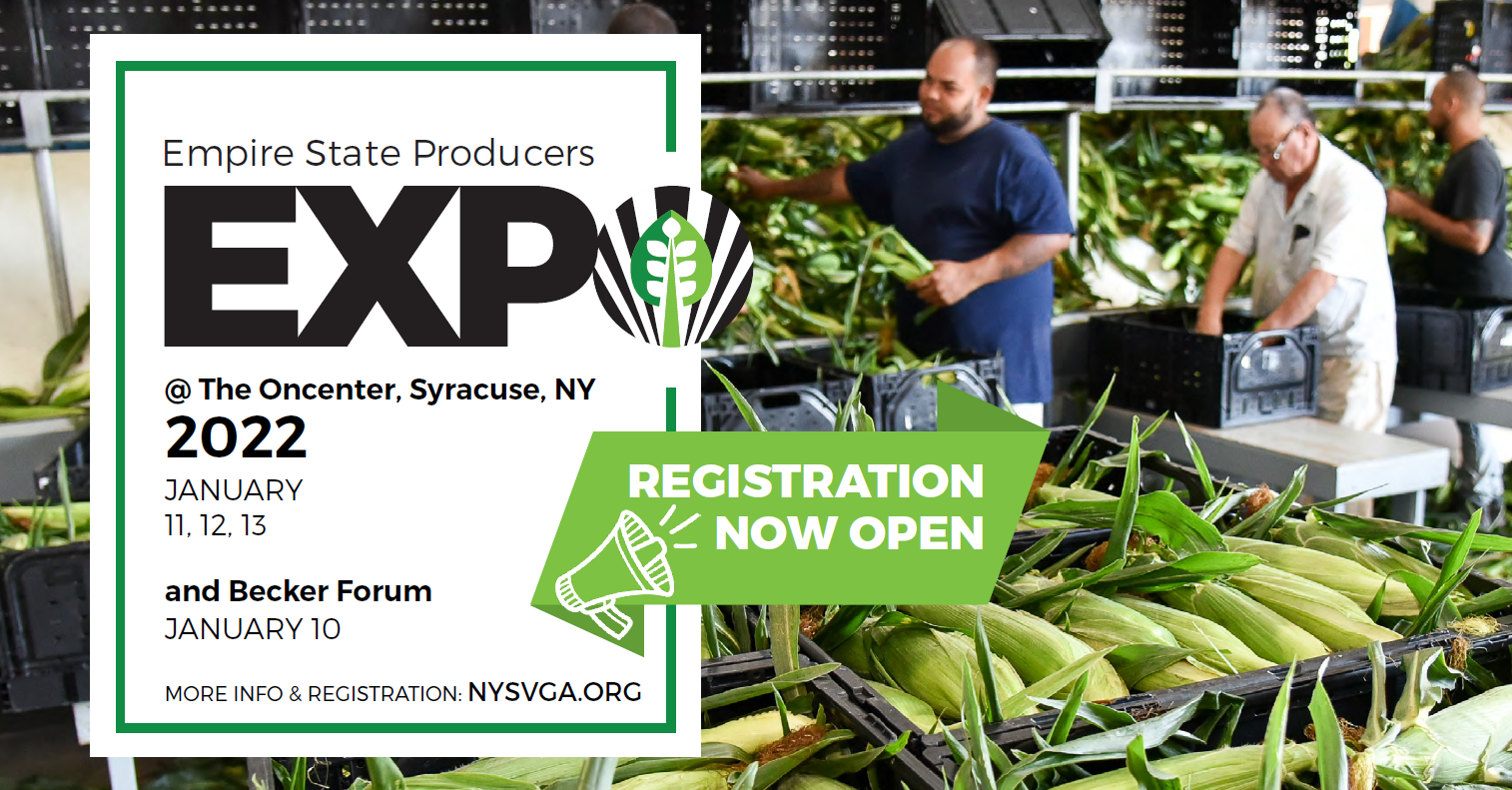
Empire State Producers EXPO cover with dates and registration info

The Empire State Producers EXPO, January 11-13, is right around the corner. Due to the surge in covid cases, the 2022 Berry Session have been moved online. This session is scheduled for Wednesday, January 12, and will run from 8:45 a.m. to 4:00 p.m. A mix of researchers, growers, and business owners will share their findings over the course of four sessions.


Visit the Producers EXPO website to see registration and pricing information. To register for the Berry Sessions only, fill out the form and pay via PayPal ($55) here.


8:45–10:15 a.m.

The first Berry Session of the day focuses on containerized berry production. Dr. Neil Mattson (Cornell University) will go over the trends in commercially-grown greenhouse strawberries, and their applicability to Northeastern farms. Senior Extension Associate Kathy Demchak (Penn State University) will review her research on container-growing strawberries and caneberries.  


10:45 a.m.–12:30 p.m.

The second Berry Session reviews blueberry production. Researchers from the United States Department of Agriculture will present on the latest breeding efforts, and Dr. Thierry Bescanon (Rutgers University) will discuss the best approaches to manage weeds in blueberry plantings. Liz Machoff (Empire Drip Supply, and the NYSBGA board president) will explain the principles of water acidification in drip irrigation. The session will close with a meeting hosted by the New York State Berry Growers Association.  


1:30–2:15 p.m.

The third Berry Session is dedicated to the economics and sustainability of berry crop production. Business owner David Duda (Dudas Blues, and an NYSBGA board member) will discuss the role of value-added products in his business. Dr. Kris Park (Cornell University) will review a New York State pricing survey of berry growers, and provide economic insights. Dr. Heather Grab (Cornell University) will share her findings on balancing pollinator care and weed management in strawberries.  


2:45–4:00 p.m

The fourth Berry Session explores lesser-known berries and nut crops that are suitable for the Northeast. Ph.D. Candidate Samantha Bosco (Cornell University) will share her knowledge of nuts as a crop and food source. Dr. Iago Hale (University of New Hampshire) will discuss the characteristics of hardy kiwifruit when grown as a commercial crop. Coming down from Northern NY, Dr. Mike Davis will present on juneberries, and grower Duane Smith will provide a summary of his experience growing honeyberries.

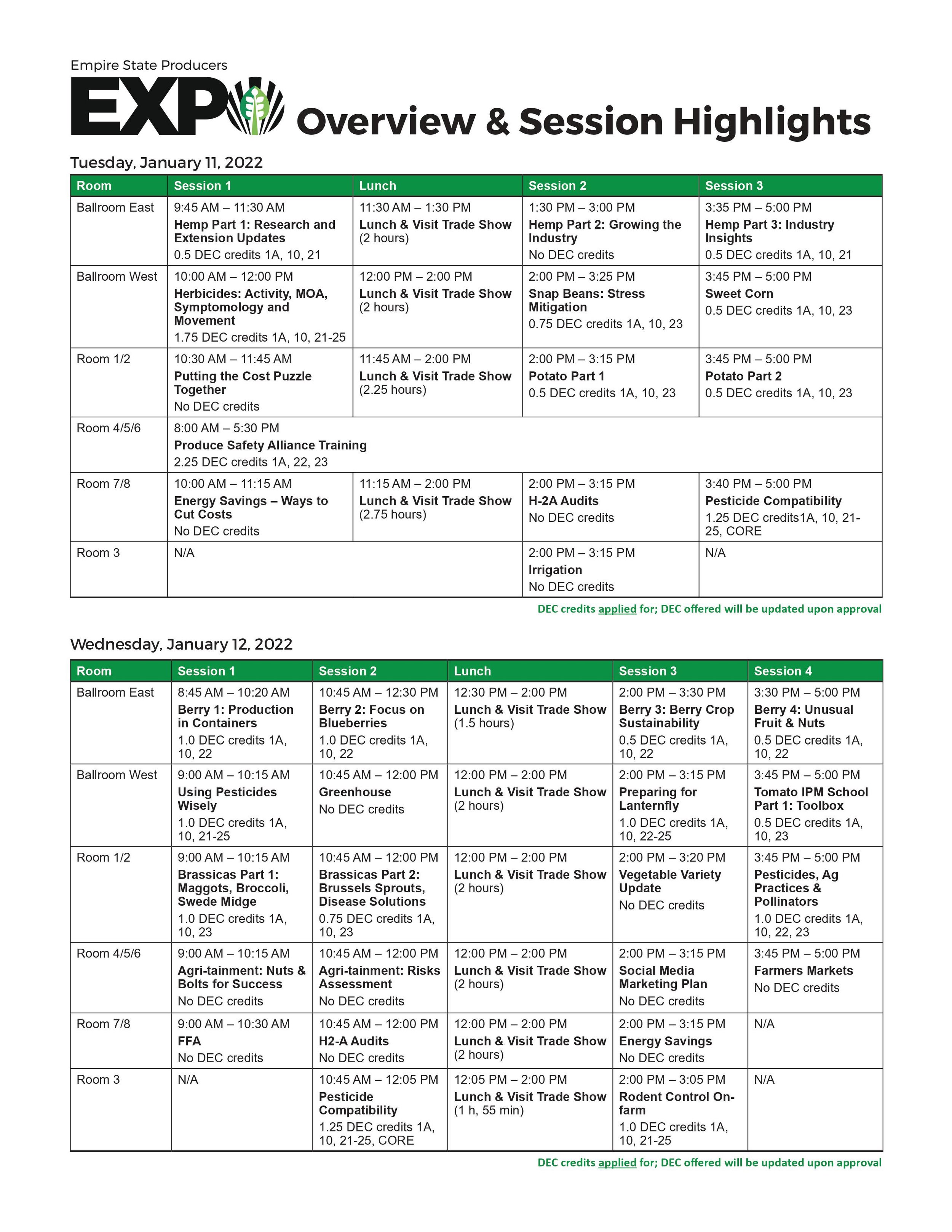
View the rest of the EXPO sessions below.


Empire State Producers Expo schedule for January 11 2022
Empire State Producers EXPO schedule for January 13 2002
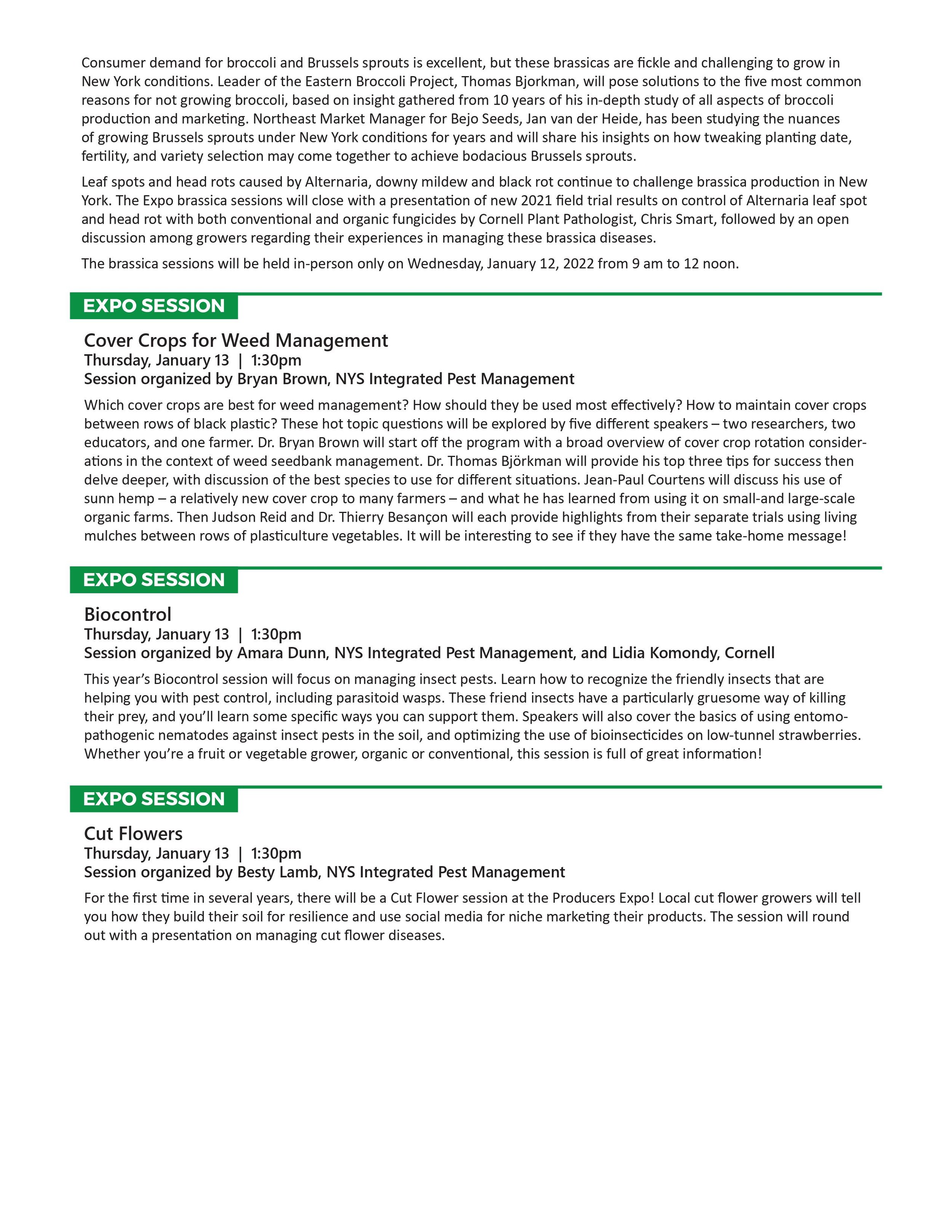
Empire State Producers EXPO session descriptions
Empire State Producers EXPO session descriptions 2